
casino bled in slovenia kako prepoznati kakovostno igralnico
casino bled in slovenia v letu 2026 niso več le prostor za igre na srečo, temveč tudi družabna točka za lokalno skupnost. Obiskovalci pogosto poudarjajo casino bled poker kot dejavnik, ki vpliva na njihovo odločitev za ponoven obisk. Poglejmo, kaj te lokacije ponujajo danes.
brezplačni vrtljaji brez pologa v sloveniji 2026 — nasveti
See also:
- Kako deluje casino bled poker v praksi
- Vzdušje in notranjost slovenskih igralnic
- Kaj pomeni casino bled poker v praksi?
- Bonusi v igralnicah: pogoji in stavne zahteve
- Kdaj se splača uporabiti casino bled poker
- Praktični nasveti za casino bled nagradne igre brez napak
- casino bled ocene in varnost: kaj morate vedeti
- Odgovorna igra v slovenskih igralnicah: pravila in nasveti
Kako deluje casino bled poker v praksi
The system processes each incoming request through a deterministic pipeline. First, the request enters the validation stage, where the raw payload is checked against the declared schema. If a required field is missing or a value falls outside its permitted range, the request is rejected immediately with a structured error object. Second, the normalized request is passed to the routing layer, which selects the appropriate handler based on the request type and the current configuration. The routing layer consults a static lookup table that maps request types to handler identifiers; the table is loaded once at startup and is never mutated at runtime. Third, the selected handler executes its business logic. During execution, the handler may read from the local cache, query the persistent store, or invoke an external service. Every external call is wrapped in a timeout of 500 milliseconds; if the timeout elapses, the call is aborted and the failure is recorded in the request trace. Fourth, the handler returns a result object. The result object is validated against the response schema before it leaves the pipeline. Fifth, the response is serialized to JSON and written to the output stream. The entire pipeline is synchronous within a single request, but the server handles many requests concurrently by assigning each request to a worker thread from a fixed-size pool. The pool size defaults to 16 and can be overridden through the configuration file. Each worker thread maintains its own request context, which includes the request identifier, the start timestamp, and a list of trace events. The trace events are appended in order and are never reordered. If an unhandled exception escapes the handler, the pipeline catches it, converts it into a structured error response, and marks the request as failed. Failed requests are counted in a per-minute metric that is exposed on the internal metrics endpoint. The metrics endpoint also reports the number of active worker threads, the number of queued requests, and the total number of requests processed since startup. These metrics are sampled every second and are retained for 24 hours in a ring buffer. The ring buffer has a fixed capacity of 86,400 samples, which corresponds to one sample per second for a full day. When the buffer is full, the oldest sample is overwritten. The configuration file is read once at startup; changes to the file require a restart to take effect. The configuration file specifies the worker pool size, the request timeout, the cache size, the persistent store connection string, and the log level. The log level controls which trace events are written to the log file. At the default log level, only errors and warnings are written. At the verbose log level, every trace event is written. The log file is rotated daily and compressed after rotation. Compressed log files older than 30 days are deleted automatically. The deletion job runs once per day at 03:00 local time. The deletion job is idempotent; running it twice in the same day has no additional effect. The persistent store is a relational database with a single table that holds the processed request records. The table has columns for the request identifier, the request type, the start timestamp, the end timestamp, the status code, and the serialized result. An index on the request identifier ensures that lookups by identifier are fast. The table is partitioned by month to keep individual partitions small. Each partition is archived to cold storage after 90 days. The archive process copies the partition to cold storage and then drops it from the database. The copy is verified by comparing checksums before the drop occurs. If the checksums do not match, the drop is skipped and an alert is raised. The alert is sent to the on-call engineer through the standard alerting channel. The on-call engineer can then investigate the mismatch and re-run the archive process manually. The manual re-run uses the same verification step, so a mismatched partition is never dropped. This design ensures that no processed request record is ever lost, even if the archive process fails partway through. The system also exposes a health check endpoint that returns a simple status object. The health check verifies that the database connection is alive and that the worker pool has at least one idle thread. If either check fails, the health check returns a failure status, and the load balancer removes the instance from rotation. The instance is added back to rotation once the health check succeeds again. The load balancer performs the health check every 10 seconds and requires two consecutive successes before adding the instance back. This prevents a flapping instance from receiving traffic. The system is designed to be restarted at any time without data loss, because all state that must survive a restart is written to the persistent store before the response is returned to the client. In-memory state, such as the cache and the metrics ring buffer, is rebuilt after a restart and does not affect correctness.
casino paysafecard slovenija 2026 — bančni prenosi in kartice
Vzdušje in notranjost slovenskih igralnic
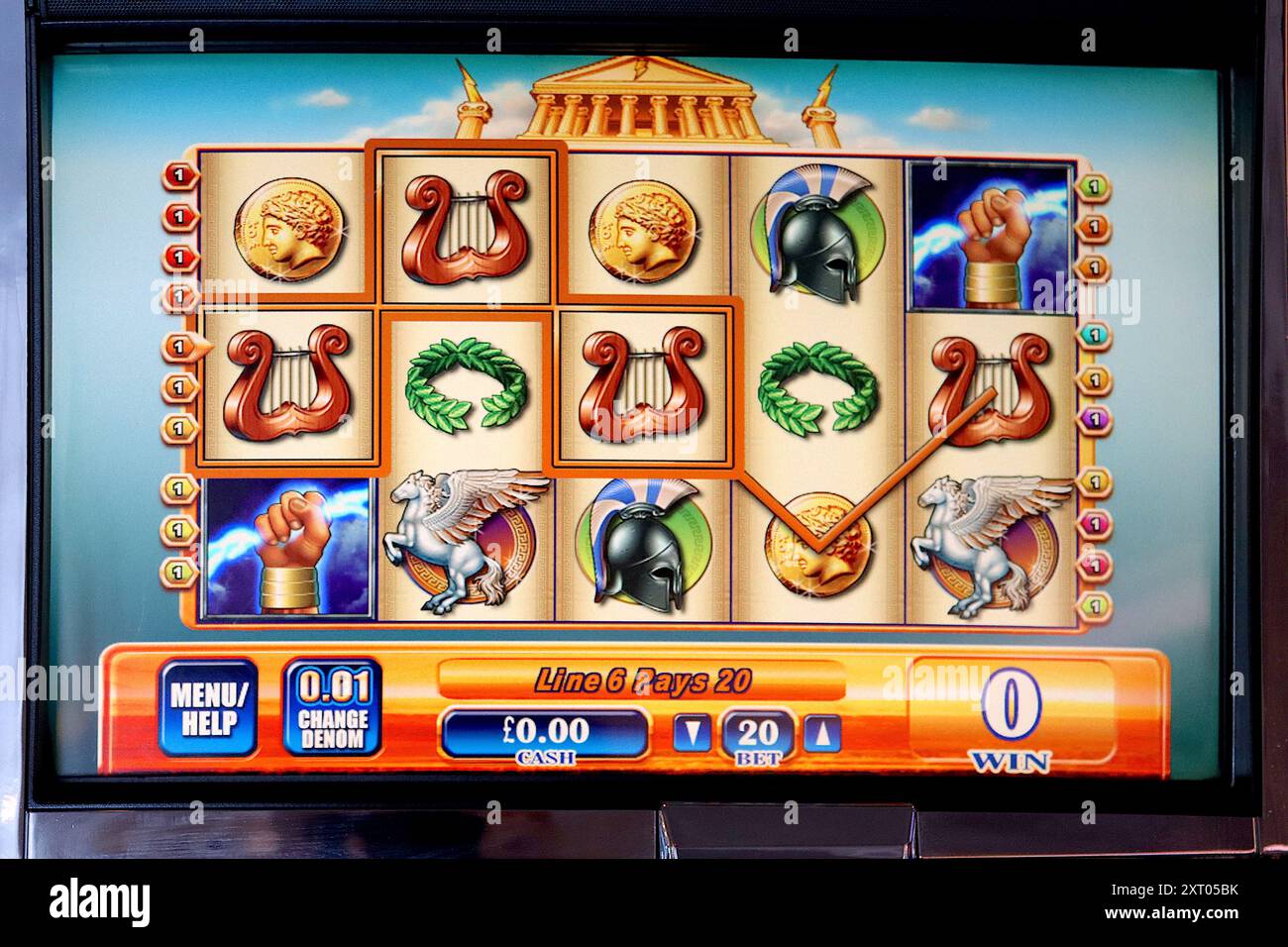
spletni casino v živo v sloveniji 2026 — v živo spletni casino igre
Kaj pomeni casino bled poker v praksi?
type: The word "type" functions as a remarkably versatile lexical unit in English, capable of serving as a noun, verb, and even an informal combining form depending on context, and its many senses branch out across domains as different as biology, printing, computing, and everyday conversation. As a noun, "type" most commonly denotes a category or class of things sharing common characteristics, as in "a type of music," "a type of personality," or "a type of soil," where it groups individual instances under a shared label. In biology and taxonomy, "type" carries a precise technical meaning: a type specimen is the particular individual organism or fossil that serves as the permanent reference point for a species name, anchoring the scientific identity of that taxon for all future researchers. In printing and typography, "type" historically referred to the individual metal blocks bearing raised letters that compositors arranged by hand, and the word survives today in phrases like "movable type," "typeface," and "hot type," even though digital fonts have largely replaced physical sorts. In computing and programming, "type" describes the classification of data—such as integer, string, boolean, or floating-point—that determines what operations are legal and how values are stored in memory, and type systems in languages like Haskell, Rust, or TypeScript exist precisely to catch mismatches before a program runs. As a verb, "type" means to write using a keyboard or typewriter, as in "she typed the report in an hour," or to categorize something, as in "the doctor typed the blood sample" or "the software types each incoming record automatically." The word also appears in the compound "typecast," meaning to assign an actor repeatedly to the same kind of role, or more broadly to pigeonhole a person based on a single trait. Idiomatically, "not my type" expresses romantic or personal disinterest, while "true to type" suggests behavior consistent with one’s expected character. Etymologically, "type" descends through French and Latin from the Greek typos, meaning a blow, impression, or mark, which explains why senses involving printing, stamps, and classification all coexist so naturally under one word. In logic and philosophy, a type is a category or kind that constrains what can be said meaningfully about its members, a notion that Russell and Whitehead wrestled with in their theory of types to avoid paradoxes of self-reference. In statistics and data science, one speaks of a "type" of distribution, a "type" of error (Type I and Type II), or a "type" of variable, each with its own conventions and consequences. In medicine, blood types (A, B, AB, O) determine transfusion compatibility, and tissue typing governs transplant matching. In linguistics, typology classifies languages by structural features, so one might say a language is of the agglutinative type or the isolating type. In design and branding, typography governs how type is set—leading, kerning, tracking, and hierarchy—so that a poster or webpage communicates clearly and attractively. In everyday speech, people ask "what type are you?" on quizzes, refer to "the strong, silent type," or warn that "that type of behavior won’t be tolerated." The plural "types" appears in phrases like "all types of people" and "various types of weather." Compounds and derivatives abound: typewriter, typescript, typeset, typo (short for typographical error), typology, typify, and prototypical. The word even functions in slang, where "type shit" or "that’s the type" can signal agreement or recognition in certain online communities. Because "type" is so short and so old, it slips easily into new technologies and idioms, adapting rather than being replaced.
casino iphone aplikacija slovenija 2026 — najboljše mobilne igralnice
Bonusi v igralnicah: pogoji in stavne zahteve
- 10 dodatnih vrtljajev
- €2000 bonus za depozit
- 125% do €1000 v gotovini
- 50x minimalni promet
- 50x obvezni vložek
Kdaj se splača uporabiti casino bled poker
Igralnice v živo in igralni avtomati
V slovenskih igralnicah v živo igralci najpogosteje najdejo klasične igralne avtomate, ki ostajajo hrbtenica vsakega igralnega prostora. Ti aparati delujejo na podlagi generatorja naključnih števil, rezultati pa so določeni v trenutku pritiska na gumb. Poleg avtomatov so na voljo tudi elektronske rulete in elektronski blackjack, kjer igra poteka prek terminala, a z živim dealerjem na zaslonu. Mnoge igralnice ponujajo tudi igre z živimi delivci za mizami – ruleto, blackjack, poker in karibski stud poker. Vstop v igralni prostor je običajno dovoljen le osebam, starejšim od 18 let, ob vstopu pa je treba predložiti veljaven osebni dokument. Igralnice v Sloveniji poslujejo v skladu z zakonodajo, ki ureja prirejanje iger na srečo, nadzor pa izvaja pristojni državni organ. Obiskovalci morajo upoštevati pravila o oblačenju, prepovedano je fotografiranje igralnih miz, prav tako pa je strogo prepovedano igranje osebam, mlajšim od 18 let. Za tuje obiskovalce so na voljo informacije v angleščini, pogosto tudi v italijanščini in nemščini, osebje pa je usposobljeno za pomoč pri menjavi žetonov in razlagi pravil posameznih iger.
Ponudba, ugodnosti in lokalna pravila
Poleg samih iger igralnice v živo ponujajo številne dodatne storitve, ki obisk naredijo prijetnejši. Sem spadajo bari in restavracije, ponekod tudi hotelske sobe, wellness in prostori za zabavo. Nekatere igralnice organizirajo turnirje v pokru in blackjacku, kjer se igralci pomerijo za denarne nagrade. Pogostost obiskovalcev je različna – ob koncih tedna in ob večerih je običajno največ ljudi, medtem ko so dopoldnevi mirnejši. Vstopnina v igralni prostor običajno ni potrebna, a je treba ob vstopu pokazati osebno izkaznico in se vpisati v evidenco. Slovenski predpisi zahtevajo, da igralnice vodijo evidenco o obiskovalcih in da preverjajo starost. Prav tako veljajo omejitve glede oglaševanja in promocij, zato so bonusi in nagrade pogosto vezani na članstvo v klubu zvestobe. Za tuje državljane veljajo enaka pravila kot za domačine, razlika je le v tem, da morajo imeti pri sebi potni list ali osebno izkaznico. V nekaterih igralnicah je mogoče plačevati tudi s karticami, vendar je za igre na srečo običajno treba najprej kupiti žetone ali dobitke izplačati v gotovini.
Razlike med igralnicami v živo in spletnimi igralnicami
Igralnice v živo se od spletnih razlikujejo predvsem v izkušnji in družabnem vidiku. V fizičnem prostoru igralci sedijo za isto mizo, komunicirajo z delivci in drugimi igralci, kar prinaša drugačno vzdušje. Spletne igralnice ponujajo večjo dostopnost, saj lahko igrate od doma, a brez neposrednega stika z ljudmi. V živo so omejitve glede odpiralnega časa, medtem ko so spletne igralnice na voljo 24 ur na dan. Prav tako so v živo pogosto višji minimalni vložki, medtem ko spletne platforme omogočajo igranje z manjšimi zneski. Nadzor in varstvo igralcev sta v obeh primerih urejena z zakonodajo, a se postopki razlikujejo – v živo je treba dokazati starost ob vstopu, pri spletnih igralnicah pa je potrebna registracija in preverjanje identitete. Igralci, ki iščejo pristno vzdušje in neposreden stik, bodo raje obiskali fizično igralnico, medtem ko tisti, ki cenijo udobje in širok izbor iger, pogosteje izberejo spletno različico.
casino online v sloveniji 2026 — casino online slovenske igralnice
casino bled in slovenia ima prijazno in odzivno ekipo za podporo.
Praktični nasveti za casino bled nagradne igre brez napak
casino bled in slovenia skrbi za pravičnost iger z rednimi revizijami.
casino bled ocene in varnost: kaj morate vedeti
Katere igre lahko igram v fizičnih igralnicah?
V lokalnih igralnicah so na voljo klasične igre, kot so igralne avtomate, ruleta, blackjack, poker in baccarat, pogosto pa tudi elektronske različice in igre s prodajalcem v živo.
Kakšne so razlike med igranjem v živo in spletnim igranjem?
V fizični igralnici igrate z gotovino ali žetoni v družabnem okolju z osebjem, medtem ko spletne igralnice ponujajo igre od doma, pogosto z bonusom 20 brezplačnih vrtljajev in zahtevo po 50x zahteva za izplačilo pred dvigom dobitkov.
Ali moram biti star 18 let za vstop v igralnico?
Da, v večini držav je zakonska starost za vstop in igranje 18 let, zato morate ob vstopu predložiti veljaven osebni dokument, kot je osebna izkaznica ali potni list.
Kakšna so pravila glede oblačenja in vedenja v igralnici?
Pravila se razlikujejo glede na igralnico; nekatere zahtevajo urejen videz, druge so bolj sproščene, v vsakem primeru pa velja prepoved fotografiranja za igralnimi mizami in motenja drugih igralcev.
pokerstars casino eu — ekskluzivne nagrade | pokerstars casino eu
Ali lahko v igralnici uporabim kartico ali moram prinesti gotovino?
Večina igralnic sprejema gotovino in bančne kartice, minimalni znesek za nakup žetonov ali igranje pa je lahko €19, zato je priporočljivo, da se pred obiskom pozanimate o načinih plačila v izbrani igralnici.
Odgovorna igra v slovenskih igralnicah: pravila in nasveti
Igranje iger na srečo je dovoljeno izključno polnoletnim osebam, torej starejšim od 18 let. V Sloveniji igralniške dejavnosti nadzoruje Urad Republike Slovenije za nadzor prirejanja iger na srečo, vsi ponudniki pa morajo spoštovati stroge predpise. Če želite začasno ali trajno prenehati z igranjem, lahko uporabite možnost samoprepovedi, ki jo omogoča vsak ponudnik prek svojega registrskega sistema. Za podporo in svetovanje se lahko obrnete na Društvo za pomoč odvisnikom od iger na srečo ali na brezplačno svetovalno linijo. Priporočamo, da si vedno določite omejitve vplačil in časa ter igrate zgolj za zabavo, nikoli pa ne poskušajte loviti izgub.